My stability became something they counted on.
Then, slowly, something they expected.
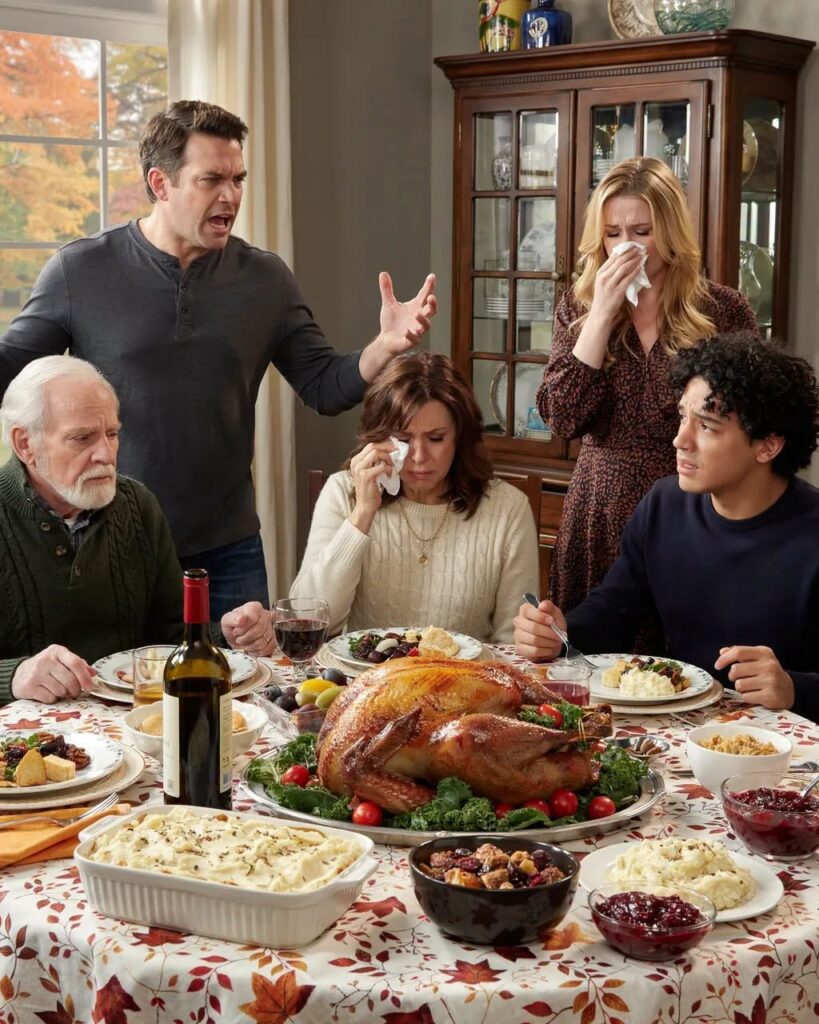
The truth came out during Thanksgiving dinner.
My grandfather Daniel had been quiet for most of the meal, listening more than speaking. Then my mother mentioned my monthly payment casually, as if it were nothing.
Grandpa stopped eating.
He looked at my father.
“You charge him rent?”
The table went still.
My father, Richard, shifted in his chair. My mother, Linda, tried to explain that I was an adult and everyone had to contribute. Claire looked down at her plate.
Grandpa’s voice stayed calm, but it carried weight.
“This is the same house he helped you buy.”
No one answered quickly enough.
My parents tried to defend themselves. They said Claire needed more support. They said I was responsible. They said I had always been good with money, as though my discipline made it fair to take more from me.
Grandpa set his fork down.
“You are treating his contribution like an obligation and her dependency like a right,” he said.
The words landed harder than any shouting could have.
For years, I had carried resentment quietly. The rent. The unpaid babysitting. The emergency loans that were never repaid. The way every family problem somehow became my responsibility because I was the one least likely to fall apart.
That night, the illusion broke.
I was not simply doing my fair share.
I was being used.
After dinner, my grandfather found me in the hallway.
“Pack what you need,” he said. “You’re coming with us.”
My parents were angry. My sister cried. Messages started arriving before I had even zipped my bag.
But for once, I did not stay to calm everyone else down.
I packed my essentials and left with my grandparents.
The next morning, my grandfather sat with me at his kitchen table. He had a notebook, a pen, and the steady patience of a man who understood that freedom often begins with numbers.
We reviewed my income.
My savings.
My debts.
My spending.
Then we made a plan.
Within a few days, he came with me to sign a lease for a modest apartment closer to my job. It was not large, but it was mine. No basement. No constant footsteps overhead. No expectation that I would drop everything because Claire needed something again.
For the first time since I was nineteen, I had a door that closed on other people’s demands.
The distance changed everything.
Not immediately. Not easily.
My family kept reaching for the old version of me. Claire called with emergencies. My mother hinted that I was being cold. My father acted offended that I no longer came home every weekend to help.
But I had learned something important.
A boundary is only real when it survives the guilt that follows it.
So I said no.
Again and again.
At first, they were shocked. Then angry. Then slowly, they began to adjust to a life where I was no longer available for every crisis they had refused to manage themselves.
Months passed before my father admitted the truth.
He told me he had relied too heavily on my stability. He said it had been easier to ask more from me because I complained less. It was not a perfect apology, but it was honest enough to matter.
Almost a year later, my mother came to my apartment.
She looked around the small living room, at the furniture I had bought myself and the quiet life I had built, and her eyes filled with tears.
“I chose peace in the house over fairness to you,” she said. “I’m sorry.”
That apology reached something in me I had tried to bury.
Claire changed too, though more slowly. After she married Ben, her second husband, he began challenging the way she treated me. He would not let her turn every inconvenience into my emergency. Over time, she stopped calling me as a first resort and began learning how to stand more firmly in her own life.
Then Grandpa Daniel passed away at seventy-nine.
In the days after his funeral, my grandmother handed me a letter he had written.
In it, he told me he was proud of me.
Not for earning money.
Not for helping the family.
But for leaving when staying was costing me too much.
He wrote that a good heart must still have a door, and that love without boundaries can become a slow disappearance.
I kept that letter.
His intervention changed the direction of my life. With the money I was no longer handing over each month, I built real savings. I focused more fully on work. Promotions came. Confidence came. Eventually, I bought a townhouse of my own.
Five years after that Thanksgiving, I hosted the family dinner under my roof.
My rules were simple.
No guilt.
No demands.
No jokes at anyone’s expense.
People brought food. Claire helped clean. My parents arrived respectfully. My grandmother sat near the head of the table, wearing the soft smile she always had when she was remembering Grandpa.
Before we ate, she raised her glass.
“To Daniel,” she said. “Who knew when silence had gone on long enough.”
The room became quiet.
I looked around my home — my table, my walls, my life — and silently thanked him.
He had not rescued me by giving me everything.
He rescued me by helping me see that I was allowed to leave.
And sometimes that is the gift that changes a life most deeply: not money, not comfort, not even protection, but the courage to walk out of a place where your kindness has been mistaken for permission.
That Thanksgiving, my grandfather gave me back to myself.
And every peaceful day since has been part of the life he helped me choose.